
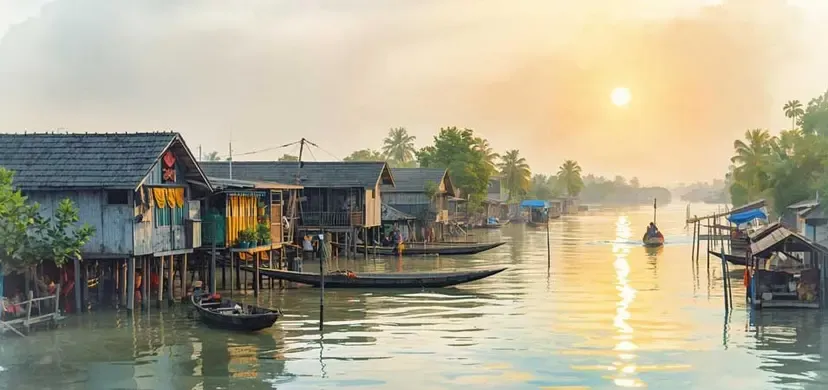
Floating Villages of Tonle Sap: Life on the Water in Cambodia
On the waters of Cambodia’s Tonle Sap Lake, life flows with a unique rhythm. Entire communities float gracefully, their wooden homes anchored to the tides, forming a vibrant tapestry of resilience and tradition. Here, the line between land and water disappears, and the lake is not just a backdrop to daily life but the very foundation of it.
For travelers who want to see a side of Cambodia far beyond its famous temples, the floating villages offer an unforgettable and deeply human experience.
A Lake That Breathes
Tonle Sap is the largest freshwater lake in Southeast Asia, and it is remarkable for something few lakes can claim: it changes direction. During the dry season, the lake shrinks to a fraction of its size. When the monsoon arrives, the swollen Mekong River pushes water back up the Tonle Sap River, causing the lake to swell dramatically and flood the surrounding forests and plains.
This yearly rhythm, often described as the heartbeat of Cambodia, shapes everything about life here. It fills the lake with fish, feeds the surrounding farmland, and explains why the people of Tonle Sap built their homes to rise and fall with the water rather than resist it.
A Community Built on Water
In these villages, schools, markets, and even temples float gracefully on the lake, a testament to the ingenuity of those who embrace the water as their home. Houses are built on bamboo and timber platforms or on stilts, depending on the season and location. Children travel to school by boat, shopkeepers sell goods from floating stores, and families tend small gardens and fish farms right beside their homes.
Boats take the place of bicycles, while the rippling currents become vibrant pathways that unite families and sustain livelihoods. You may see a young child paddling a small basin like a boat, a floating shop gliding from house to house, or a family sharing a meal on a porch just above the waterline. Even the pigs and chickens have their own floating enclosures.
What You Will See and Experience
A boat tour through the floating villages is a window into daily life that few places in the world can match.
- Floating homes and shops: Wander past colorful houses, grocery stalls, and workshops, all drifting gently with the current.
- Floating schools and temples: See how education and spirituality continue to thrive on the water.
- Fishing communities: Watch families cast their nets and tend traps, practices passed down through generations.
- Flooded forests: In some areas, such as Kompong Phluk, tall stilted houses rise above the water, while the mangrove-like forest below becomes a peaceful canoe route during the wet season.
- Local interaction: Many tours include time to meet residents, learn about their traditions, and understand their way of life.
The Best Floating Villages to Visit
- Chong Khneas: The closest to Siem Reap and the most accessible, making it a convenient half-day trip.
- Kompong Phluk: Famous for its towering stilted houses and the flooded forest, which is especially beautiful in the wet season.
- Kampong Khleang: The largest and most authentic village, offering a quieter and less touristy experience.
- Mechrey: A smaller, peaceful community that gives a more intimate glimpse into traditional lake life.
When to Visit
The lake looks very different depending on the season, so the best time to visit depends on what you want to see.
- Wet season (June to October): Water levels are high, the flooded forests are accessible, and the scenery is lush and green. This is the best time for boat rides through the trees.
- Dry season (November to February): The weather is cooler and drier, making it comfortable for sightseeing, though water levels start to fall and some routes change.
- Late dry season (March to May): It is hot and the water is low, but the stilted houses stand tall above the exposed ground, creating dramatic photo opportunities.
Travel Tips
- Bring sun protection. A hat, sunglasses, and sunscreen are essential, as there is little shade on the water.
- Dress modestly and comfortably. Light, breathable clothing works best, and a light rain jacket is helpful in the wet season.
- Choose responsible tours. Opt for operators who support the local community, and be thoughtful about where your money goes.
- Respect privacy. Always ask before taking photos of residents, especially children.
- Carry small cash. It is useful for tipping, buying snacks, or purchasing handmade items from local families.
- Go at sunset. The soft golden light over the water is magical, and the views are some of the most memorable of the trip.
A Lesson in Harmony
For visitors, gliding by boat through the floating villages becomes more than just a journey. It transforms into a profound lesson in the harmony between humanity and nature. Each encounter unfolds stories of adaptation, ingenuity, and hope, providing a rare glimpse into a lifestyle crafted entirely by water.
In a world that often tries to bend nature to its will, the people of Tonle Sap show another way: to move with the water, respect its rhythms, and build a community that thrives because of it. It is a journey that stays with you long after the boat returns to shore.
OXFORD STAR TRAVEL
Dubai • UAE
Exclusive Airline Fares & Charter Flights
Air Arabia Charter
Airtour Istanbul Charter
flydubai Charter
SalamAir Special Fares
Iran & Middle East Travel Specialist