Petra, Jordan: The Rose City Carved into the Desert Cliffs
Hidden deep within the deserts of Jordan lies one of the world’s most extraordinary archaeological sites: Petra. Carved directly into rose-colored sandstone cliffs, this ancient city feels like a secret that has been waiting centuries to be rediscovered. Today, it is one of the most awe-inspiring destinations in the Middle East, and a must-see for anyone who loves history, adventure, and dramatic scenery.
Why Petra Is Called the Rose City
Petra is known as the “Rose City” because of the color of its stone. At sunrise and sunset, the cliffs glow in shades of pink, red, and gold, creating a landscape that looks almost unreal. The city was built by the Nabataeans, a skilled Arab people who made Petra the heart of a wealthy trading empire, thanks to its location along caravan routes linking Arabia, Egypt, and the Mediterranean.
A City Lost to the World
Although Petra was well known in ancient times, its story took a dramatic turn in later centuries. As trade routes shifted and the city declined, its history became more and more obscure. For more than a thousand years, the ancient capital was lost to the outside world, its location known mainly to the local Bedouin who lived in the surrounding desert.
It remained unknown to the Western world until 1812, when the Swiss explorer Johann Ludwig Burckhardt, traveling in disguise, reached the site and brought it to international attention. His discovery opened the door for generations of travelers, archaeologists, and historians to explore its secrets.
Walking Through the Siq
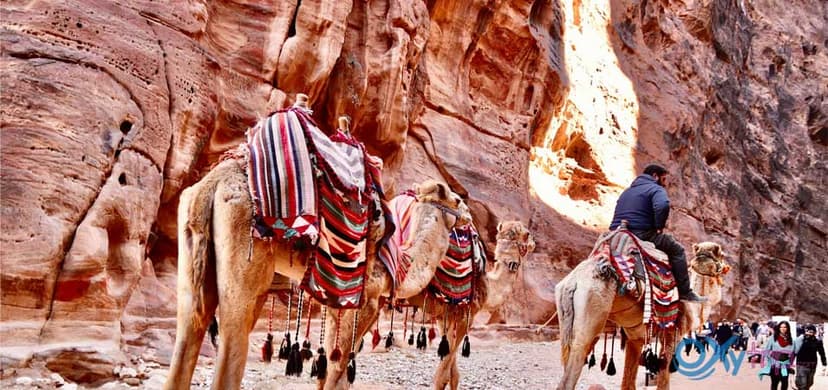
The journey into Petra is as memorable as the city itself. Visitors enter through the Siq, a narrow canyon about 1.2 kilometers long, with towering rock walls that rise up to 80 meters on both sides. Along the way, you will notice ancient water channels, carved niches, and layers of colored stone twisting overhead.
Then comes the moment everyone remembers. As the canyon narrows, the walls suddenly open, and the breathtaking Treasury (Al-Khazneh) appears before you, glowing in the light. It is one of Petra’s most iconic landmarks and one of the most dramatic reveals in the world of travel.
A Symbol of Human Creativity and Engineering
Petra is not just a historical site. It is a symbol of human creativity and engineering, carved directly into rock cliffs. The Nabataeans were masters of water management, building dams, channels, and cisterns that allowed a thriving city to flourish in the middle of the desert. Their architecture blended local traditions with influences from Greece and Rome, resulting in monuments that are unlike anything else in the world.
Today, Petra is a UNESCO World Heritage Site and one of the New Seven Wonders of the World, attracting travelers from all over the globe.
Top Sights to See in Petra
- The Treasury (Al-Khazneh): The most famous monument, with an elaborate façade carved into the cliff face.
- The Street of Facades: A row of impressive tombs lining the path beyond the Siq.
- The Roman Theatre: An ancient amphitheatre carved from the rock, once seating thousands.
- The Royal Tombs: A group of grand burial monuments with colorful, banded sandstone.
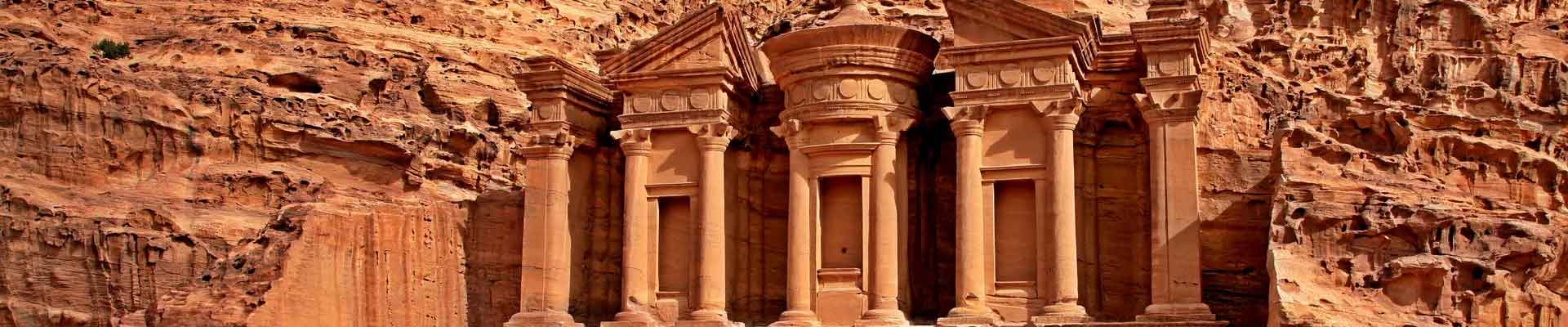
- The Monastery (Ad-Deir): A massive monument reached by climbing around 800 steps, rewarded by sweeping views of the surrounding landscape.
- The High Place of Sacrifice: A sacred site offering panoramic views over the valley.
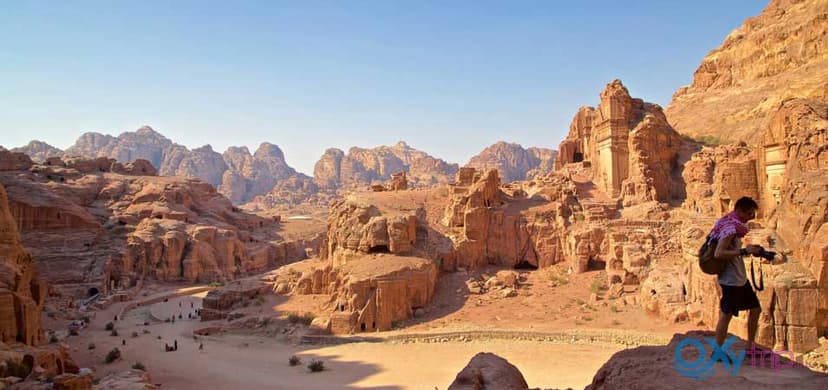
- Petra Viewpoints: Spots above the Treasury that offer a stunning bird’s-eye perspective.
Petra by Night
For a different perspective, join the evening experience known as Petra by Night. The Siq is lit by hundreds of candles, leading to the Treasury, where visitors sit on mats and listen to traditional Bedouin music and stories under the stars. It is quiet, atmospheric, and one of the most magical ways to experience the city.
The Best Time to Visit
- Spring (March to May): Mild temperatures and clear skies make this the best season for exploring.
- Autumn (September to November): Warm days, cooler evenings, and comfortable conditions for long walks.
- Summer (June to August): Very hot, so start early and bring plenty of water.
- Winter (December to February): Cooler and sometimes rainy, with fewer crowds, but nights can be cold.
Travel Tips
- Allow at least one full day. Petra is vast, and two days lets you explore without rushing.
- Start early. Arriving at opening time helps you avoid crowds and heat, and gives you the best light for photos.
- Wear sturdy walking shoes. The terrain is uneven, with many steps and sandy paths.
- Carry water and sun protection. There is little shade in many areas.
- Consider a guide. A local guide brings the history to life and helps you discover hidden corners.
- Bring a Jordan Pass. It can combine your visa fee and entry to Petra and other major sites, often saving money.
- Respect the site. Avoid climbing on monuments and follow local guidance.
Experience Petra with Oxytrip
With Oxytrip, you can explore Petra with guided tours and seamless travel planning. From flights and hotel bookings to private guides and multi-day Jordan itineraries that combine Petra with Wadi Rum and the Dead Sea, Oxytrip helps you create a journey that is smooth, memorable, and tailored to your style.
Petra is more than a destination; it is a journey into the heart of an ancient civilization. Step into the Siq, and let the Rose City reveal its secrets.
OXFORD STAR TRAVEL
Dubai • UAE
Exclusive Airline Fares & Charter Flights
Air Arabia Charter
Airtour Istanbul Charter
flydubai Charter
SalamAir Special Fares
Iran & Middle East Travel Specialist